By Our Correspondent
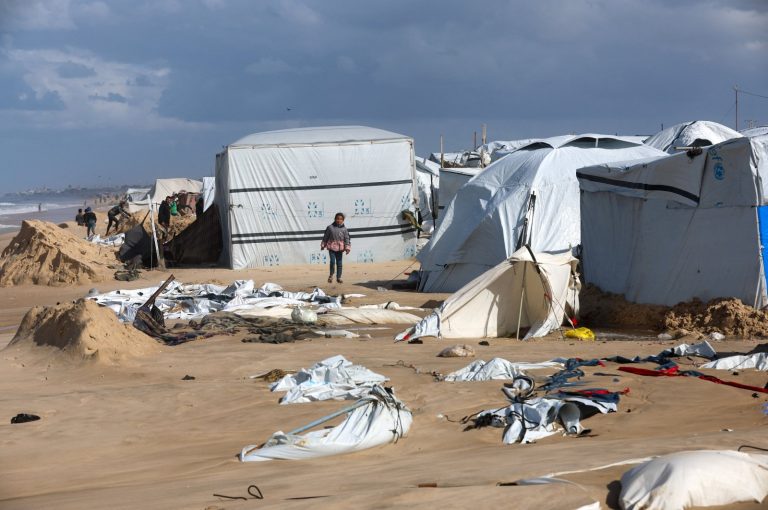
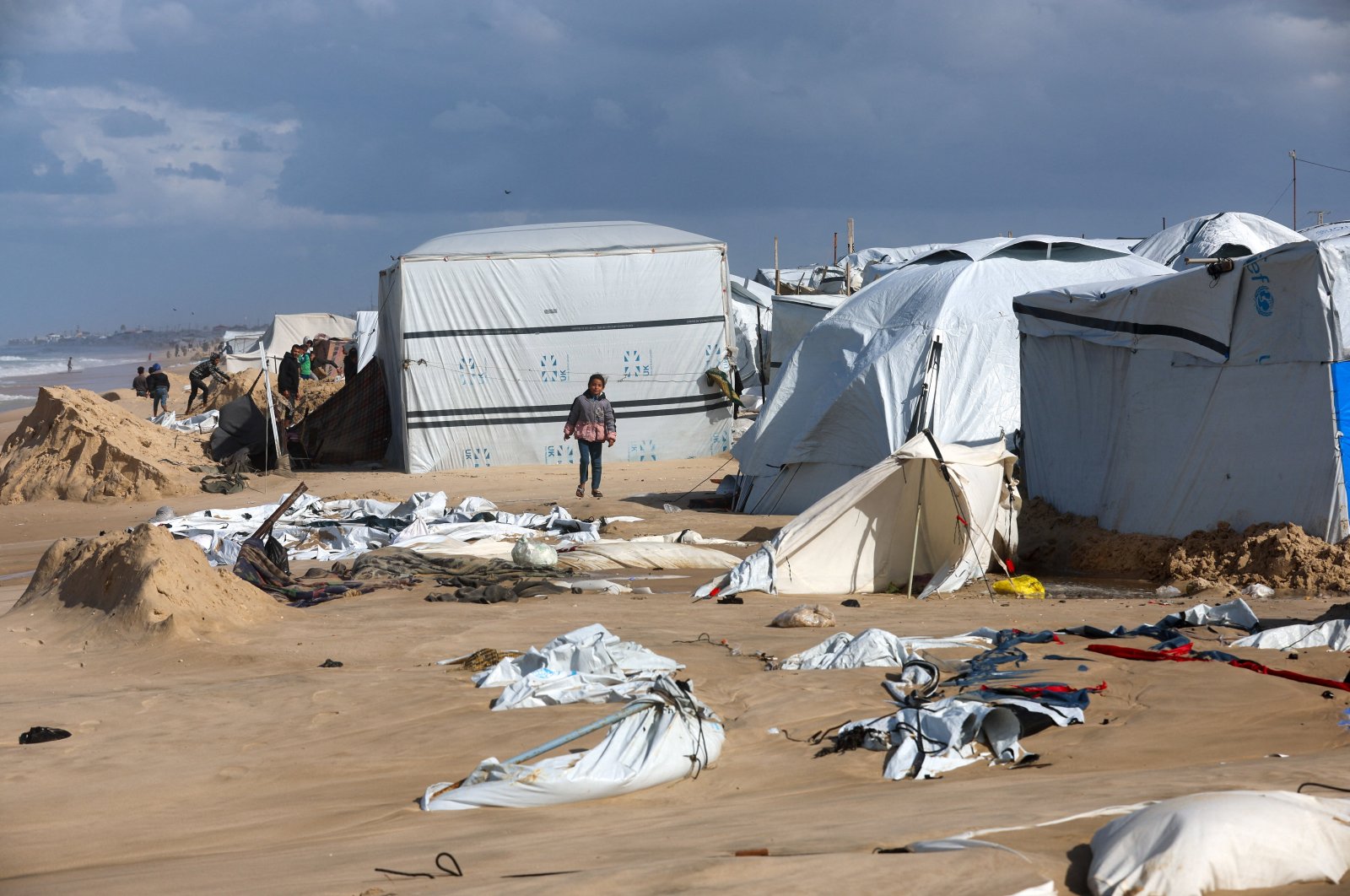
Thousands of displaced Palestinians in the Gaza Strip are facing worsening humanitarian conditions after heavy rains and violent storms destroyed makeshift shelters, leaving families exposed to freezing temperatures and increasing the risk of disease outbreaks.
The situation has been aggravated by delays in securing approval for the entry of about 150,000 humanitarian tents into the territory, despite the growing demand for emergency shelter, aid organisations have said.
At least five people, including four children and a woman, reportedly died during the storms. According to the Palestinian Ministry of Health, one child drowned in floodwaters, while three other children and their mother were killed after a sand dune collapsed on their tent.
The storms have left several families homeless, while damaged sanitation infrastructure has worsened conditions in temporary settlements, with reports of sewage overflowing into residential areas.
A displaced resident, Raed Jamal, said his children had fallen ill after rainwater soaked their clothes and flooded their shelter.
He described how his family spent the night using cooking pots to collect rainwater leaking through holes in their tent.
Humanitarian organisations have warned that thousands of vulnerable residents, particularly children, face increased risks of respiratory infections, hypothermia and other cold-related illnesses without urgent assistance.
Medical Aid for Palestinians (MAP) said its medical teams were anticipating an increase in respiratory diseases and other health complications associated with cold, damp and overcrowded living conditions.
The United Nations estimated that approximately 940,000 people were living in flood-prone areas of Gaza in makeshift shelters that offered inadequate protection against heavy rainfall.
The humanitarian crisis has also been compounded by the failure of stormwater pumping facilities to operate because of insufficient electricity supply.
The UN disclosed that about 26,000 households had requested assistance following the storms, while at least 3,900 households had been left entirely without shelter.
Aid agencies have blamed restrictions on the entry of essential humanitarian materials, including construction supplies needed to provide displaced families with more durable accommodation.
ShelterBox, an international humanitarian organisation, said emergency tents intended for Gaza had remained outside the territory for nearly two years, forcing aid workers to rely on temporary materials such as tarpaulins and wooden pallets.
The organisation warned that such improvised shelters were inadequate to withstand severe weather conditions and called for the provision of stronger, more durable alternatives.
Meanwhile, the Council for Arab-British Understanding (Caabu) has urged the British Government to pressure Israel to guarantee unhindered humanitarian access to Gaza and reverse restrictions affecting aid organisations, including Médecins Sans Frontières, Oxfam and the Norwegian Refugee Council.
Israel said it had facilitated the entry of 10,000 tents into Gaza. However, the UN estimated that another 150,000 tents were awaiting approval, as approximately 94 per cent of the territory’s population required shelter assistance.
Israeli authorities have maintained that an average of 600 trucks enter Gaza daily. However, Israeli human rights organisation Gisha disputed the figures, arguing that the method used to calculate truckloads understated the actual volume of humanitarian supplies entering the territory.
According to Gisha, Israeli authorities count 12 pallets of goods as one truck, despite standard trucks having the capacity to carry approximately 20 pallets. The organisation also criticised what it described as inadequate transparency regarding humanitarian supplies approved for entry.
A displaced mother of a seven-month-old baby, Nour al-Batsh, said she had been forced to rent a partially destroyed apartment for $500 monthly after her tent collapsed.
She warned that the approaching winter posed a serious threat to displaced families, particularly those living in makeshift shelters near the coastline.
Humanitarian organisations have renewed calls for the immediate entry of emergency tents, construction materials, medical supplies and sanitation equipment, warning that continued delays could expose more displaced Palestinians to preventable deaths and disease outbreaks.
About the Author