Mark Aba
The Minister of Solid Minerals Development and spokesman of the All Progressives Congress, (APC) Presidential Campaign Council, (PCC), Dele Alake has said the economic and social reforms introduced by President Bola Ahmed Tinubu is the most far-reaching and courageous policy undertaken by any civilian administration in Nigeria since independence.
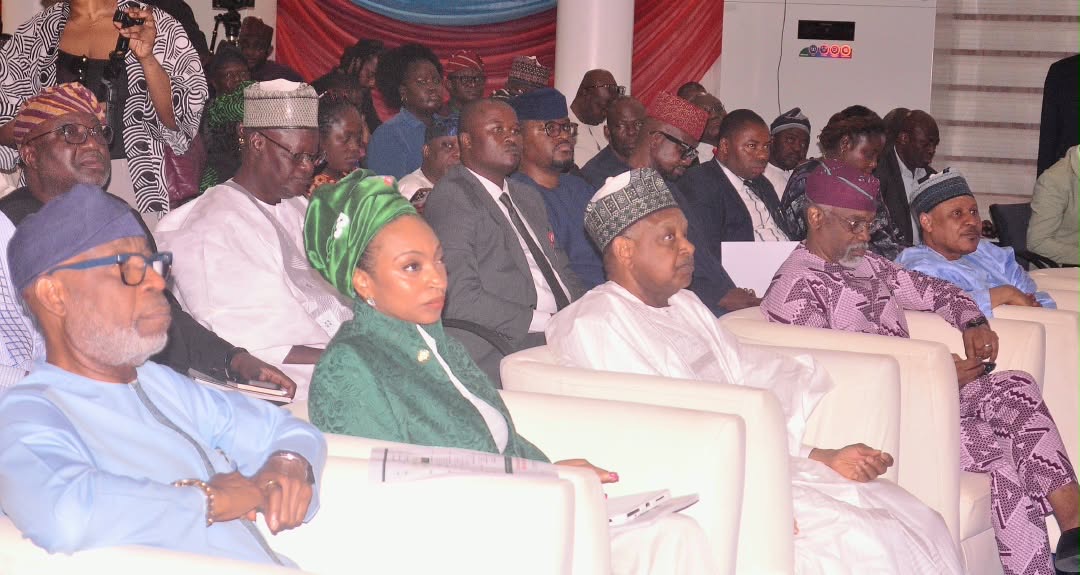
Alake, made this declaration during the unveiling of the party’s 2027–2031 policy manifesto, titled: “From Reforms to Prosperity,” on Tuesday in Abuja.
He challenged critics and political opponents to an open national debate over the administration’s reform record, arguing that previous governments had failed to address fundamental economic challenges for lack of political will.
The Minister also said the Tinubu administration had demonstrated unusual political courage by tackling longstanding structural problems despite the immediate economic and political consequences of its decisions.
Drawing on his experience as a journalist and Minister of Solid Minerals Development, Alake argued that successive administrations had maintained an unsustainable economic structure that continued to drain national resources.
He identified the removal of petrol subsidy and the unification of the foreign exchange market as two major decisions aimed at correcting longstanding distortions in the economy.
“The removal of petrol subsidy was necessary to eliminate financial leakages arising from smuggling and other fraudulent practices, which placed enormous pressure on government finances.
“The previous multiple exchange rate system created opportunities for a privileged few to make substantial profits through arbitrage without contributing meaningfully to economic productivity,” he said.
Alake further stressed that dismantling the system was essential to restoring transparency and achieving long-term macroeconomic stability.
Highlighting developments in the solid minerals sector, the minister said ongoing reforms were already producing significant results and strengthening Nigeria’s efforts to diversify its economy from dependence on oil.
He disclosed that revenue generated from the sector rose from N6 billion in 2023 to N38 billion in 2024, before increasing to N70 billion in 2025.
Alake further revealed that the sector generated more than N101 billion in the first nine months of 2026, adding that the figures could be verified by the Central Bank of Nigeria.
“The solid minerals industry, which had previously received limited attention, was increasingly attracting international investors and emerging as an important contributor to the country’s non-oil revenue.”
Addressing concerns over the rising cost of living, Alake rejected suggestions that the administration’s economic policies were designed to benefit only wealthy Nigerians.
He explained that the government’s macroeconomic reforms were being complemented by social intervention programmes intended to reduce the burden of economic adjustments on vulnerable households.
Among the initiatives he highlighted was the Nigerian Education Loan Fund (NELFUND), which provides financial assistance to students and helps ease the cost of tertiary education for families.
Looking ahead, Alake said the new manifesto would focus on translating the gains of economic reforms into widespread prosperity through industrialisation, improved security, agricultural expansion and inclusive economic growth.
He described Nigeria as having successfully crossed a difficult phase of economic adjustment, urging Nigerians to support continuity in the implementation of the reforms.
“Abandoning the current reform agenda midway could undermine the progress already achieved and derail the country’s prospects of attaining sustainable economic prosperity,” he added.
About the Author