By Our Correspondent
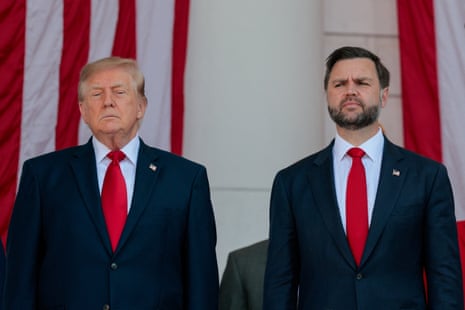
US President Donald Trump has declared that Washington no longer needs, negotiated agreement with Iran to end the ongoing conflict, while directing Vice-President JD Vance to shift his attention to domestic political issues.
The directive appears to sideline Vance from diplomatic efforts to revive negotiations with Tehran, which he had reportedly been coordinating through intermediaries in Iran and Qatar.
Trump announced the decision in a post on his social media platform on Thursday, directing the vice-president to devote his “complete and total attention” to what he described as widespread corruption and crime in cities and states controlled by the Democratic Party.
Vance had been involved in efforts to reopen diplomatic channels with Tehran following the outbreak of hostilities in February, when the United States and Israel launched joint military strikes against Iran.
Iran retaliated by restricting access to the strategic Strait of Hormuz, triggering a surge in global fuel prices and raising concerns about disruptions to international oil supplies.
However, Trump’s latest comments suggest a significant shift in Washington’s approach to the conflict, with the president insisting that a negotiated settlement is no longer necessary.
“We don’t need a deal with Iran,” Trump wrote. “Those days have long since passed. We’ve got their money, Hundreds of Billions of Dollars, and we’ve got their Strait.”
The declaration points to a possible acceptance of a prolonged standoff between Washington and Tehran, despite the absence of a comprehensive peace agreement.
The United States has maintained a blockade on Iranian ports, while maritime traffic, including crude oil shipments, through the Strait of Hormuz has largely resumed.
Both countries have also avoided a major escalation in recent months, with Washington refraining from large-scale military strikes and Tehran halting extensive ballistic missile attacks on US military installations and allied countries in the region.
Last week, Trump further downplayed the possibility of renewed military action, declaring that the war was effectively over.
Speaking at a White House press conference after meeting Qatar’s Prime Minister, Sheikh Mohammed bin Abdulrahman Al Thani, Trump said Israel and its Gulf allies were sufficiently protected against Iranian threats.
He argued that further military escalation was unnecessary, although he maintained that the United States remained prepared to respond if the situation changed.
“At this point, taking the military action doesn’t seem to be a very necessary thing but we’re locked and loaded, ready to go for any reason,” he told reporters.
Trump also disclosed that Gulf leaders had appealed to him not to resume military operations against Iran.
The latest directive represents a setback for Vance, who had emerged as a key figure in Washington’s diplomatic efforts to end the conflict, despite previously expressing reservations about the war.
In April, the vice-president led a US delegation to Islamabad, Pakistan, for negotiations aimed at securing an end to the hostilities.
Other prominent figures involved in the diplomatic process include Trump’s son-in-law, Jared Kushner, and US special envoy Steve Witkoff.
According to Axios, Vance had held almost daily discussions with Qatar’s Prime Minister, Sheikh Mohammed; Pakistan’s army chief, Asim Munir; and other intermediaries in an effort to revive negotiations.
The vice-president was also reportedly said to have written to Mohsen Rezaei, secretary of Iran’s Supreme National Security Council, several weeks earlier, seeking to reopen direct negotiations between Washington and Tehran.
Meanwhile, Vance reportedly blamed the Republican Party’s historic losses in the midterm elections on the war with Iran, suggesting that the conflict had undermined the party’s electoral prospects.
“The reason we lost is the war,” Vance wrote in a lengthy post on X following the elections, adding that Trump had also acknowledged the political consequences of the conflict.
Trump, however, has continued to defend his decision to launch military operations against Iran. While acknowledging that the conflict contributed to rising fuel prices, he has maintained that the military action was necessary to prevent Tehran from developing nuclear weapons.
About the Author