By Our Reporter
The Independent National Electoral Commission (INEC) has removed 1,609,553 records from its Preliminary Register of Voters following a nationwide clean-up exercise, while identifying 54 registration personnel across 10 states for disciplinary action, including possible prosecution, over alleged irregularities.
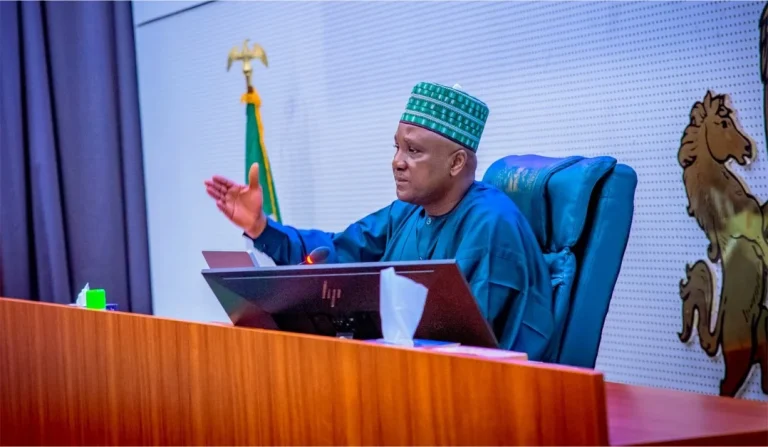
INEC Chairman, Prof. Joash Amupitan, (SAN), disclosed this on Monday at a press conference in Abuja, where he addressed concerns arising from the display and online publication of the Commission’s 2026 Preliminary Register of Voters.
Amupitan explained that INEC received several claims, objections and complaints following display of the register at ward level between October 9 and 15, 2026, and its subsequent publication online.
He said the exercise was conducted in line with Section 19(2) of the Electoral Act, 2026, which requires the Commission to receive and consider public objections, claims and complaints against the Preliminary Register within 14 days of its display.
According to him, the Commission was required to examine the complaints and take appropriate corrective measures before publishing the Final Register of Voters scheduled for December 15, 2026.
The INEC chairman noted that the publication of the preliminary register attracted public scrutiny over suspected artificial or manipulated photographs, multiple registration attempts, unusual names and registration patterns, as well as reports of deceased persons whose names remained on the register.
He said some Nigerians had also alleged that the irregularities were deliberate attempts to compromise the 2027 general elections.
Amupitan, however, said the Commission waited until the expiration of the statutory 14-day period to complete its review, identify those responsible for the infractions and provide a comprehensive response to the concerns raised.
He disclosed that the clean-up exercise, which followed the 2025/2026 Continuous Voter Registration (CVR), had been concluded.
“INEC harvested 11,088,238 registration records across the three phases of the exercise, out of which its Automated Biometric Identification System (ABIS) initially flagged 1,545,052 records for further examination.
“That being flagged by the automated system did not automatically mean a registration was invalid. Such records were subjected to further scrutiny and adjudication before any decision was taken,” he said.
Amupitan also said 1,277,052 registrations had been confirmed invalid and excluded before the publication of the Preliminary Register.
He added that following the public display, another 268,000 cases were subjected to adjudication, with 217,722 confirmed invalid and removed, while 50,278 were cleared as valid and retained.
The Commission subsequently identified another 113,886 invalid registrations through additional screening, which were also removed from the register.
He said the exercise resulted in the removal of 331,608 additional confirmed invalid registrations following public objections, claims and complaints, alongside 873 separately verified records of deceased voters.
This brought the total number of records removed to 1,609,553, comprising 1,608,680 confirmed invalid registrations and 873 deceased voters’ records.
The INEC chairman further disclosed that investigations uncovered instances in which some registration personnel deliberately circumvented established procedures and abused provisions designed to accommodate exceptional registration circumstances, including those involving persons with disabilities.
He said the affected records had been identified and subjected to appropriate review and corrective measures, while the personnel involved had been identified for further administrative investigation.
“Fifty-four persons cutting across ten states have been identified as complicit and necessary disciplinary action will be taken against them, including possible prosecution,” he said.
To prevent a recurrence, Amupitan said the Commission was strengthening its voter registration procedures through enhanced biometric capture, authentication and verification safeguards.
He also disclosed that at its meeting on Monday, November 9, 2026, the Commission resolved to address duplications in the existing register and directed that cases already flagged through public complaints, as well as obvious irregularities, be removed after proper verification.
Amupitan assured Nigerians that the Commission remained committed to maintaining a credible, accurate and reliable National Register of Voters ahead of the 2027 general elections.
About the Author