Mark Aba, Abuja
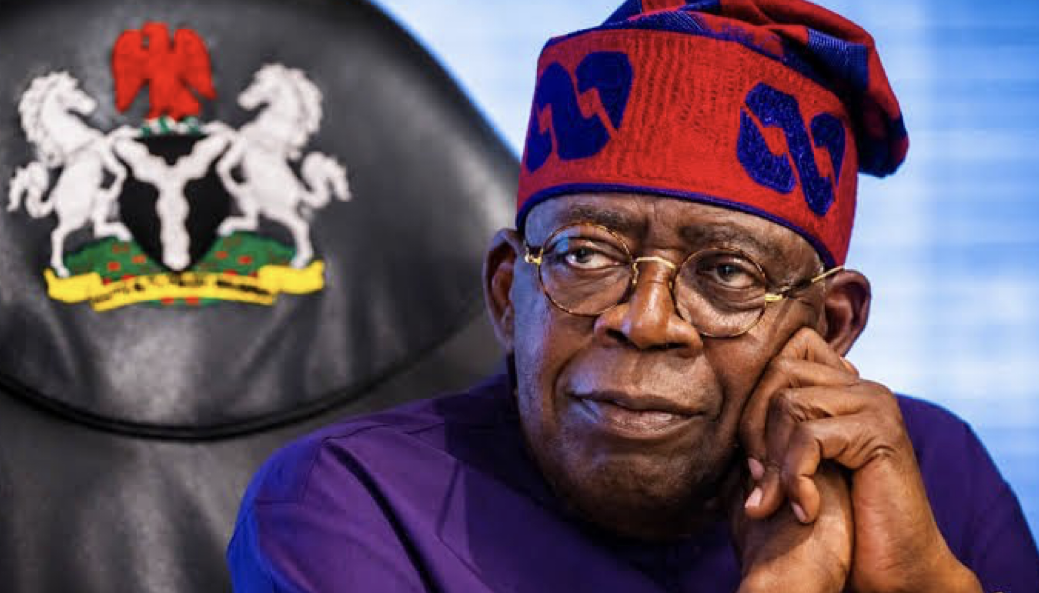
The All Progressives Congress Presidential Campaign Council (APC-PCC) has urged Nigerians to assess President Bola Ahmed Tinubu’s 2023 campaign promise on electricity within the full context of his remarks and the interventions undertaken by his administration since assuming office.
The council said the President’s pledge to end estimated billing and ensure stable electricity supply must be considered alongside his commitment to provide satisfactory explanations to Nigerians should he fail to deliver on the promise.
In a statement issued on Sunday, November 1, 2026, and signed by its spokesperson, Dele Alake, the APC-PCC recalled that Tinubu made the pledge during an engagement with members of the Organised Private Sector (OPS) in Lagos ahead of the 2023 general elections.
At the meeting, Tinubu, who was then the APC presidential candidate, promised to address the systemic and institutional challenges that had hindered the growth of Nigeria’s electricity sector for more than five decades.
“Whichever way, by all means necessary, you will have electricity, and you will not pay for estimated bills anymore. A promise made will be a promise kept,” he had declared.
The council noted that Tinubu had also challenged Nigerians not to support his re-election if he fails to fulfil the promise, except he provided satisfactory explanations for his inability to do so.
According to Alake, recent public commentaries had quoted the President’s pledge without including the concluding part of his remarks, insisting that a fair assessment should take into account the complete statement and the administration’s record in the power sector.
While acknowledging that Nigeria’s electricity challenges remains unresolved, the council said the administration had introduced policy reforms, financial interventions and infrastructure investments aimed at addressing the sector’s longstanding problems.
It recalled that on June 9, 2023, barely two weeks after assuming office, Tinubu signed the Electricity Act 2023 into law, opening the electricity market to greater participation by state governments.
The legislation decentralised electricity generation, transmission and distribution, allowing states to establish independent regulatory agencies and attract private investment into their respective electricity markets.
States including Lagos, Enugu, Abia, Ekiti, Oyo, Kaduna and Niger have begun taking advantage of the new legal framework, the council said.
On the financial challenges facing the sector, the APC-PCC said the administration inherited more than N6 trillion in accumulated legacy debts covering the period between 2015 and 2025 and had initiated measures to address the liabilities.
It identified the Presidential Metering Initiative as a key intervention designed to bridge the country’s estimated metering gap of more than seven million electricity customers.
The council disclosed that more than 1.5 million customers had been metered under the initiative within the last three years.
It also defended the administration’s electricity tariff adjustments, saying they were intended to improve the financial sustainability of the market, while measures were being introduced to cushion low-income households against the impact of higher costs.
The statement further highlighted interventions by the Rural Electrification Agency, which it said had extended solar-powered electricity to universities, hospitals and rural communities to improve access to energy.
On efforts to clear outstanding debts in the electricity market, Alake said the Federal Government had established a N4 trillion bond programme to settle verified legacy liabilities owed to 21 electricity generation companies (GenCos) and gas companies (GasCos).
He disclosed that the first and second tranches of the programme had raised more than N1.2 trillion to facilitate the settlement of part of the verified debts.
According to him, the intervention was expected to restore confidence in the electricity market, reduce investment risks and encourage power generation companies to invest in upgrading their facilities.
The council cited Geregu Power Plc’s recent announcement of investments in new power transformers to improve operations at its Geregu 1 Power Plant as an example of the impact of the government’s interventions.
On transmission infrastructure, the APC-PCC said Tinubu had accelerated the implementation of the Presidential Power Initiative (PPI), which was initiated under former President Muhammadu Buhari.
It explained that the President reviewed the existing agreement with German partners and signed an Acceleration Agreement in December 2023 to fast-track projects aimed at strengthening the national transmission grid.
By December 2024, the Federal Executive Council had approved contracts for the first batch of five Transmission Company of Nigeria (TCN) substations located in strategic electricity load centres.
The projects, according to the council, were nearing completion and were expected to be commissioned before the end of the administration’s first term.
It added that the Federal Executive Council approved another batch of projects in June 2026, covering the construction of eight new substations and the upgrade of four existing facilities in selected locations.
The council explained that electricity infrastructure projects required specialised equipment and lengthy procurement and delivery processes, making immediate improvements difficult to achieve.
On electricity tariffs, Alake said the administration recognised the need to balance the financial sustainability of electricity distribution companies with consumers’ ability to pay.
He explained that the introduction of service-based tariff bands was designed to improve revenue collection, strengthen the financial position of distribution companies and reduce the government’s financial burden arising from electricity subsidies.
However, he maintained that the government would continue to pursue measures to improve the commercial viability of the electricity market while protecting vulnerable Nigerians and ensuring access to electricity.
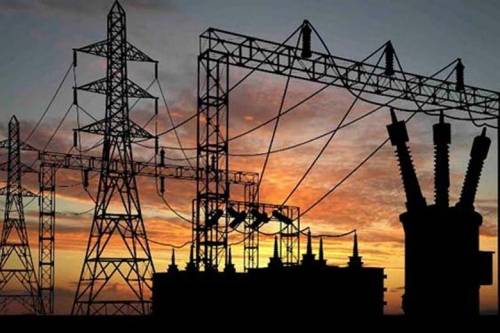
The APC-PCC also highlighted plans to modernise the Osogbo Grid Control Centre, which was constructed more than 60 years ago, as well as develop an East-West Super Grid to strengthen the country’s transmission infrastructure.
Reaffirming the administration’s position, Alake said the government remains committed to its electricity sector promises, adding that ongoing reforms, financial interventions and infrastructure projects were intended to reposition the industry for sustainable growth.
About the Author