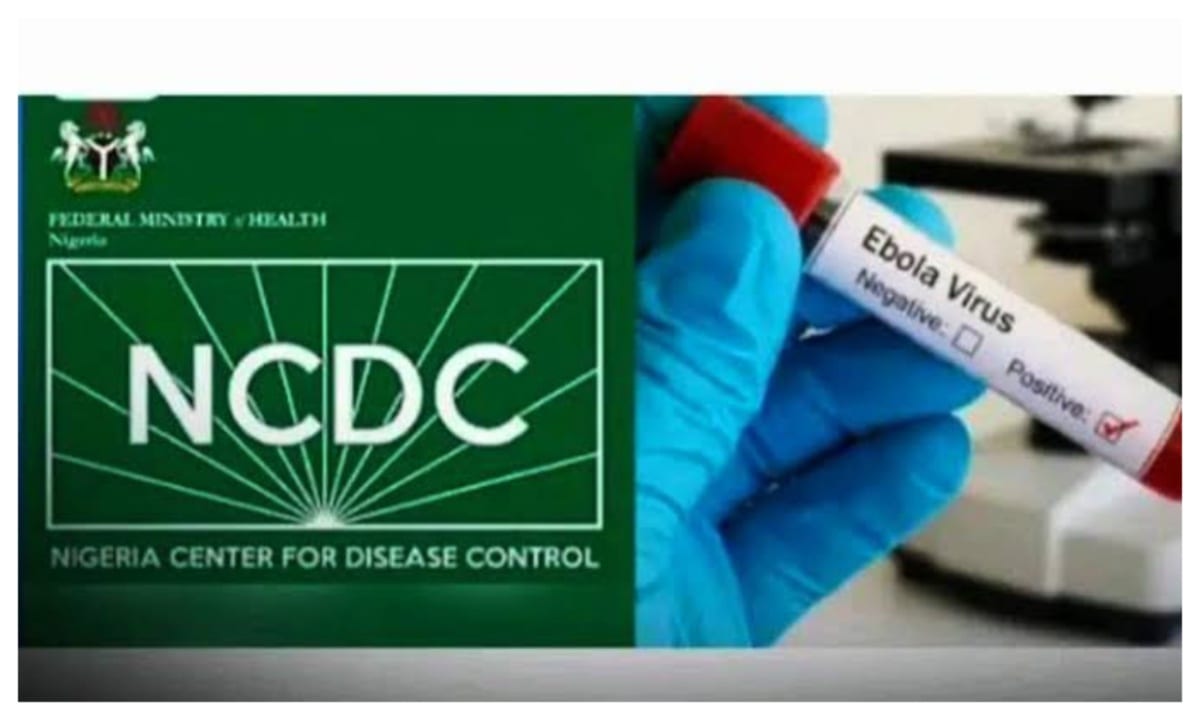
The Nigeria Centre for Disease Control and Prevention (NCDC) has announced that two suspected cases of Ebola Virus Disease (EVD) in Adamawa State tested negative after undergoing two rounds of lab tests.
The agency stated that this result means the only confirmed Ebola infection in Nigeria is still the Bundibugyo case reported in the Federal Capital Territory (FCT).
In a statement, signed by Dr. Jide Idris, Director-General, NCDC on Sunday mentioned that the Public Health Emergency Operations Centre in Adamawa received reports of the suspected cases early on October 30, 2026.
He explained that both individuals showed symptoms related to Ebola and were quickly isolated while health authorities began their investigations and safety measures.
“Luckily, the samples tested negative for EVD after two rounds of testing,” Idris noted.
He emphasized that there have been no confirmed Ebola cases in Adamawa State, commending the state government for its quick response.
“At this point, I want to recognize efforts of the Commissioner for Health in Adamawa State and his team for their proactive actions.
“NCDC will continue to provide appropriate technical support to the Adamawa State Government to strengthen their response operations,” he said.
The recent news comes as public health officials are on high alert after confirming a case of Bundibugyo Ebola in Abuja. This case involves a traveler who recently came to Nigeria from Uganda.
Concerns about the possible spread of the disease arose when suspected cases were reported in Adamawa State, leading both state and federal health authorities to launch investigations and take precautionary actions.
Fortunately, laboratory tests have shown that the two individuals do not have Ebola, according to the NCDC.
Idris asked Nigerians to stay calm and refrain from sharing unverified information regarding the situation.
“We encourage everyone to remain calm and avoid spreading unconfirmed information or rumors about what’s happening. The public should get updates from official government and public health sources,” he stated.
The director-general of NCDC emphasized that Ebola is a serious infectious disease that needs quick identification, proper clinical care, and effective prevention measures.
He advised anyone experiencing symptoms like fever, severe weakness, headaches, muscle pain, vomiting, diarrhea, or unexplained bleeding, especially after potential exposure to seek medical help right away and inform healthcare workers about their travel or contact history.
“People should not self-medicate and should follow the guidance of healthcare professionals,” Idris added.
He also mentioned that the NCDC will work with the Adamawa State Government and other relevant partners to keep monitoring the situation and provide updates as new verified information becomes available.
The agency reaffirmed its commitment to safeguarding public health through early detection, evidence-based actions, clear communication, and a coordinated national response.
About the Author