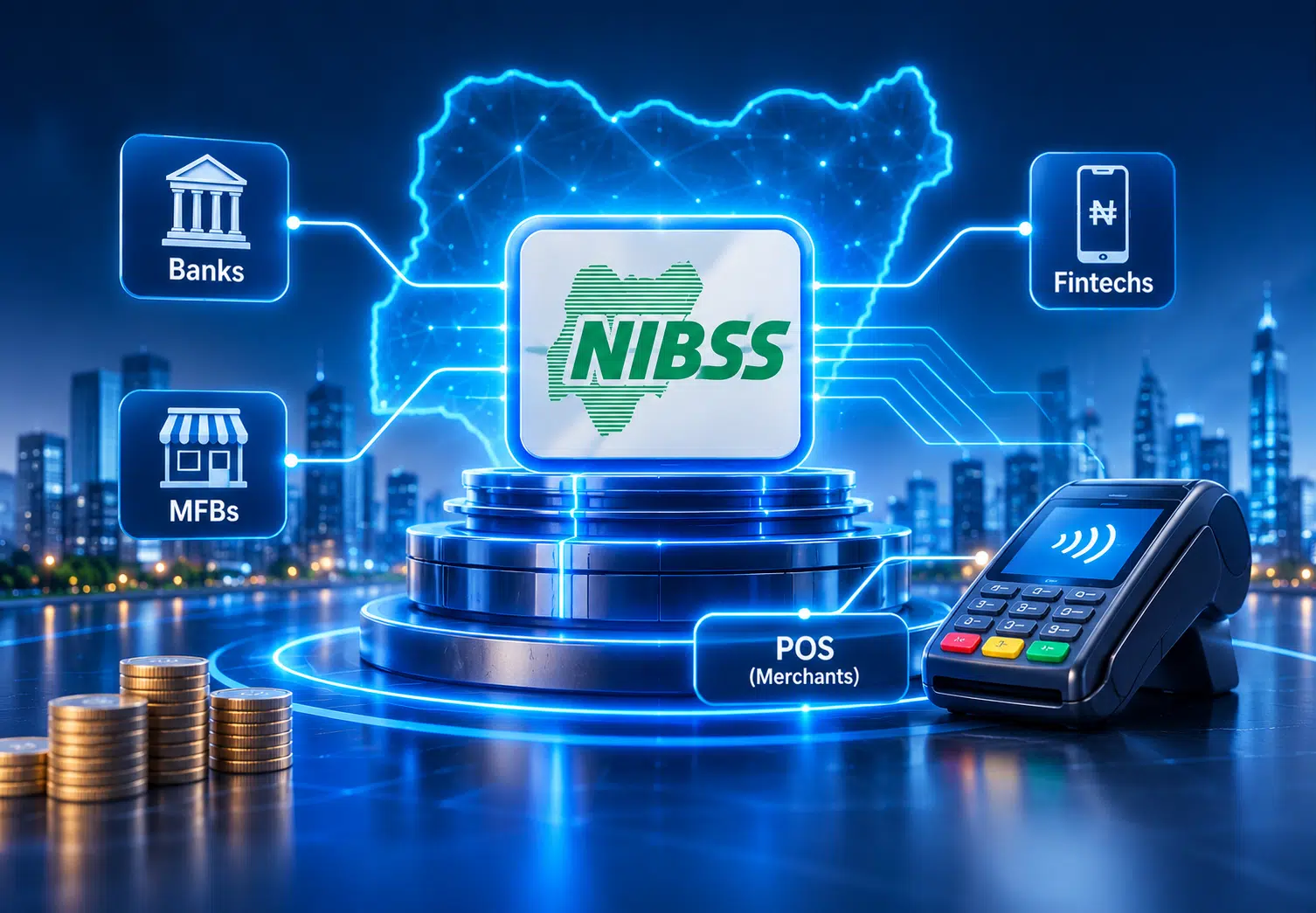
The Nigeria Inter-Bank Settlement System (NIBSS) is positioning Nigeria’s National Payments Stack (NPS) for cross-border integration with African payment systems, in a move that could expand the country’s digital payments infrastructure beyond its domestic market and strengthen regional financial connectivity.
The Managing Director and Chief Executive Officer of NIBSS, Mr Premier Oiwoh, disclosed this on Thursday in Balaclava, Mauritius, on the sidelines of the launch of the 2026 State of Inclusive Instant Payment Systems (SIIPS) in Africa Report.
Oiwoh said the NPS was being developed to accommodate Nigeria’s domestic payment requirements while supporting interoperability with other countries through the adoption of international payment standards.
He explained that the infrastructure was built around the ISO 20022 financial messaging standard, with additional fields incorporated to address Nigeria’s peculiar transaction requirements without compromising its ability to connect with international payment systems.
According to him, the approach would enable Nigeria to maintain control over its domestic payment architecture while meeting the technical requirements for cross-border transactions.
“We examined it and realised that even in Nigeria we needed more fields in that particular standard, so we created more fields.
“What we have built is uniquely bigger than ISO 2022 but ISO 2022 plus plus plus. That’s what I like to call it, native to Nigeria,” he said.
Oiwoh said the infrastructure would support Nigeria’s participation in regional and continental payment networks, potentially making it easier for businesses and individuals to transact across African borders.
He disclosed that transactions were already passing through NIBSS infrastructure in connection with the Pan-African Payment and Settlement System (PAPSS), while the organisation was exploring additional integration opportunities with other countries.
He identified the Economic Community of West African States (ECOWAS) as a particularly promising market for expansion, given the similarities in payment requirements among member countries.
According to him, NIBSS is engaging with countries and regional economic blocs interested in connecting their payment infrastructures with Nigeria’s system.
The NIBSS chief also argued that the emergence of multiple regional payment systems across Africa should not necessarily be viewed as fragmentation, noting that different arrangements could coexist based on countries’ settlement structures, costs and integration priorities.
“There is nothing wrong with having multiple payment systems. There’s nothing wrong because, one, you know, PAPSS is there; they have their own cost.
“The region is there; they have their own settlement and settlement arrangement and cost arrangement. So everybody should go the way they want to go,” he said.
He explained that connecting different regional payment networks could eventually provide broader continental access without requiring every country to adopt a single payment infrastructure.
Oiwoh said Nigeria’s experience in developing instant payment systems placed it in a position to contribute to the evolution of Africa’s digital financial ecosystem.
He described the NPS as a critical component of Nigeria’s digital public infrastructure, alongside national identity and data exchange systems, with NIBSS responsible for the payments component and the National Identity Management Commission (NIMC) providing the identity infrastructure.
He added that the NPS was designed to accommodate multiple languages and emerging technologies, including machine learning and artificial intelligence, to support the changing requirements of digital financial services.
Beyond cross-border connectivity, Oiwoh said NIBSS was expanding the system’s domestic capabilities to accommodate additional services, including direct debits and recurring payments.
These functionalities, he said, would improve the efficiency of Nigeria’s payment ecosystem and broaden the range of services available to individuals and businesses.
For Nigeria, the regional expansion of the NPS presents an opportunity to extend the reach of its financial technology infrastructure, deepen participation in Africa’s digital economy and potentially strengthen the country’s position in the continent’s emerging cross-border payments market.
About the Author