By Susan Taiwo
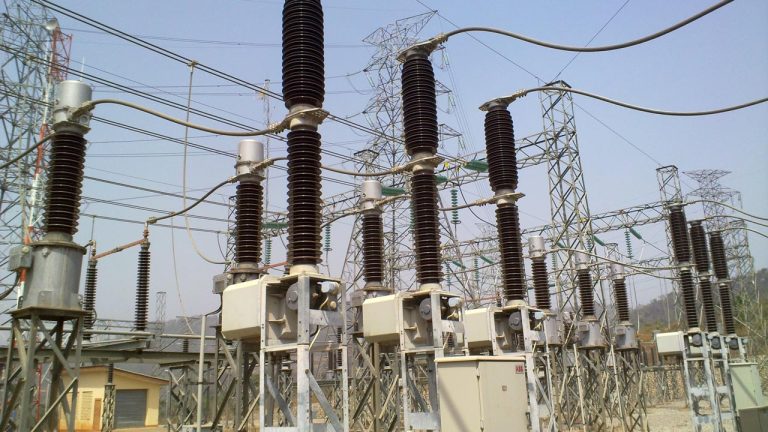
The Federal Government has invested more than $237m in electricity transmission infrastructure as part of efforts to strengthen grid reliability, restore industrial power supply and increase electricity delivery to 5,540 megawatts by 2029.
The Managing Director and Chief Executive Officer of FGN Power Company Limited, Kenny Anuwe, disclosed this at the sixth edition of the Power Correspondents Association of Nigeria (PCAN) workshop held at the weekend.
Anuwe said the planned infrastructure improvements were expected to increase electricity reliability by at least 60 per cent above current grid performance, potentially enabling about 2,000 industries to reconnect to the national grid.
He explained that the investment was part of broader efforts to address longstanding infrastructure challenges affecting electricity supply and industrial productivity.
According to him, improved grid reliability would not only benefit households but also enable industries to reduce their dependence on alternative energy sources, thereby lowering operating costs and boosting productivity.
“That is significant. That is something that we absolutely can look forward to in Nigeria. In terms of the economic impact, you can see that we’ve outlined it.
“But we know that at least 2,000 industries can come back on grid. And this data is based on the number of industries that are presently on grid,” he said.
Anuwe noted that the ongoing investments represented only part of the funding required to transform the electricity sector, adding that sustainable financing models would be critical to accelerating infrastructure development.
He disclosed that FGN Power Company was pursuing a $2.3bn investment project, with $1.3bn expected from European financiers and another $1bn from Chinese investors.
He, however, put the broader investment requirement for the power sector at approximately $18bn, stressing that the funding would have to be mobilised from multiple sources rather than relying exclusively on government resources.
“We’re not saying that the money comes to FGN Power Company Limited, but we’re saying it comes into the sector in such a way, such investment models will allow us to scale and to move quickly,” he said.
He explained that the company was adopting a guarantee-based financing framework under which the Federal Government would provide sovereign guarantees and contribute 15 per cent counterpart funding to support investments.
Anuwe maintained that attracting the capital required to expand electricity infrastructure would depend on the availability of bankable and scalable financing arrangements.
He said such models would be essential to achieving Nigeria’s ambition of building a $1tn economy.
“I believe that Nigeria can build and will build a trillion-dollar economy by leveraging bankable and scalable investment models for its electricity power investments,” he said.
He further argued that infrastructure development should be viewed as an economic asset capable of attracting private investment, stimulating industrial activities and supporting sustainable economic growth.
Meanwhile, the planned transmission improvements come amid renewed concerns over declining electricity generation, particularly during the dry season, when reduced water inflows into hydroelectric power stations and gas supply constraints affecting thermal plants place additional pressure on the national grid.
Earlier, PCAN Chairman, Obas Esiedesa, warned that the recurring seasonal decline in electricity generation between November and March continued to undermine efforts to achieve stable power supply.
He attributed the decline to reduced water availability at hydroelectric facilities and inadequate gas supplies to thermal power plants.
“One critical issue that deserves urgent attention is the recurring seasonal decline in electricity generation, particularly between November and March,” Esiedesa said.
He called for stronger collaboration among the Federal Government, electricity regulators, generation companies and gas suppliers to ensure adequate fuel supply to thermal power stations, particularly during periods of reduced hydroelectric generation.
Esiedesa also identified inadequate transmission and distribution infrastructure, liquidity challenges, investment shortfalls and regulatory uncertainties as major obstacles confronting the power sector.
He stressed that resolving Nigeria’s electricity crisis would require coordinated interventions across the entire power value chain, noting that improving generation capacity alone would not guarantee reliable electricity supply without corresponding investments in transmission and distribution infrastructure.
About the Author