By Mark Aba
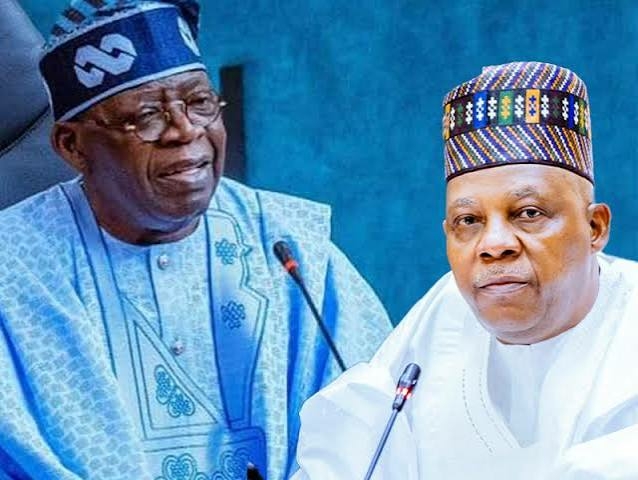
Sports stakeholders across Nigeria have unveiled a grassroots mobilisation strategy aimed at securing approximately 8.9 million votes for President Bola Ahmed Tinubu’s re-election bid in 2027 through a nationwide network of athletes, coaches, sports administrators and enthusiasts.
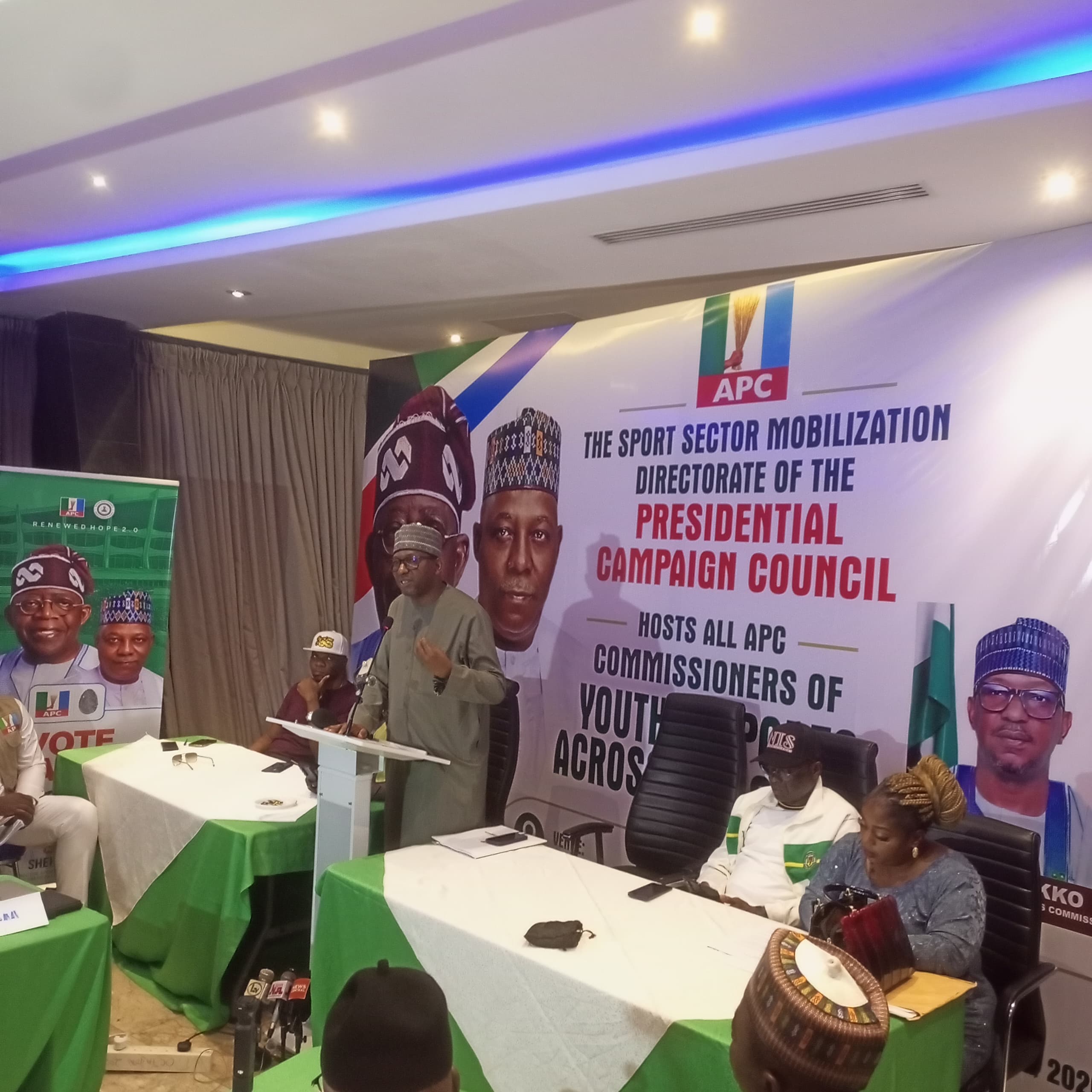
Chairman of the National Sports Commission (NSC) and Director of the Sports Sector Mobilisation Directorate of the All Progressives Congress (APC) Presidential Campaign Council (PCC), Alhaji Shehu Diko, disclosed the plan on Wednesday in Abuja after a strategy meeting with sports and youth development commissioners from the 36 states and the Federal Capital Territory (FCT).
The directorate was established to showcase the Tinubu administration’s achievements in the sports sector and mobilise stakeholders to support the President’s re-election bid.
Diko said the initiative would leverage Nigeria’s extensive grassroots sporting structures to establish a nationwide political support network ahead of the 2027 general elections.
He explained that the mobilisation strategy was targeting an average of 1,000 sports enthusiasts and stakeholders in each of the country’s 8,809 electoral wards, with participants drawn from sports associations, federations, administrators, former athletes, coaches, referees and other industry professionals.
According to him, the strategy is premised on the widespread reach of sports and its ability to unite Nigerians across ethnic, religious and political divides.
The directorate plans to work through existing sports associations, federations and institutions at national, state, local government and ward levels to establish a sustainable mobilisation network.
Under the proposed framework, each local government area would have a director of sports, while former athletes, sports legends, coaches and other prominent figures in the industry would be integrated into the campaign structure.
“At the ward level, five coordinators will be appointed to identify sports enthusiasts, organise activities and develop a database of potential supporters.
“We also plan to stage community sporting competitions, initially focusing on football and another popular sport selected according to the interests of individual wards,” Diko said.
He said the competitions could also feature basketball, athletics and traditional sports, depending on the sporting interests of the communities.
According to him, the sporting activities would provide opportunities to identify emerging talents while engaging participants on the administration’s sports policies and Tinubu’s second-term agenda.
Diko said a digital database would be created to capture participants’ details, identify their locations and facilitate sustained communication with them.
The participants would subsequently be integrated into the campaign structure as grassroots mobilisers, vote canvassers and supporters.
“We believe that if we are able to bring about 1,000 people on average from each ward, we are bringing about 8.9 million people into the database,” he said.
However, he acknowledged that registering participants would not automatically translate into political support, stressing the need for sustained engagement and communication to persuade them to support the President.
Diko urged sports commissioners and administrators who attended the meeting to take ownership of the initiative and begin consultations with relevant stakeholders in their respective states.
He said the proposed framework had been presented to the central campaign council and was awaiting approval before implementation would commence.
According to him, the initiative is designed to achieve a dual objective of promoting grassroots sports development through talent identification and harnessing the sporting community’s networks to mobilise political support for Tinubu ahead of the 2027 elections.
“We are not just taking sports as a campaign, we are using our sporting structures to go down and tell the people what the President has done for sports,” he said.
On the administration’s achievements in the sports sector, Diko said the government had introduced a deliberate framework for sports development, including the restoration of the National Sports Commission.
He said the restoration was aimed at eliminating unnecessary bureaucratic intermediaries and ensuring that professionals with the requisite knowledge and experience managed the country’s sports industry.
According to him, funding for sports has increased by more than 600 per cent under the Tinubu administration compared with previous governments.
Diko also said the administration had introduced a funding arrangement under which allocations to the sports sector would be released immediately after the national budget was signed into law.
He said the policy was designed to address delays in fund releases, which often disrupt sporting competitions and programmes, particularly at the state level.
On infrastructure development, Diko said the Federal Government had initiated and awarded projects across the country, including interventions in community sports facilities and major stadiums.
He added that the government was developing a sports infrastructure development bond to mobilise funds from the private capital market for the rehabilitation and development of sporting facilities nationwide.
Diko further highlighted the expansion of the National Institute for Sports (NIS), saying the institute had established offices across the six geopolitical zones to improve coaching standards and provide professional training opportunities.
He said efforts were underway to secure partnerships with the world football governing body, FIFA, and the Confederation of African Football (CAF) to ensure that qualifications issued by the institute received wider international recognition.
On talent development, he said the Tinubu administration had approved the establishment of six Centres of Excellence in selected universities in collaboration with the Federal Ministry of Education.
The centres, he explained, would combine academic education with professional sports training, allowing talented young Nigerians to pursue their education while developing their sporting careers.
Diko cited the example of 16-year-old Nigerian athlete Rosemary, who recently won gold at the Youth Olympics, saying the administration was committed to rewarding outstanding young athletes while encouraging them to remain in school.
He said the athlete received $20,000 in recognition of her achievement and subsequently returned to school to continue her education.
According to him, some beneficiaries of the administration’s sports development initiatives had secured scholarships to study and train abroad, while others had progressed to represent Nigeria in international competitions.
About the Author