By Our Correspondent
Ukraine has deployed an advanced combination of soldiers, ground robots, aerial drones and electronic warfare systems to repel Russian forces in a major counteroffensive known as Operation Vivaldi in eastern Ukraine.
The operation, which took place during the spring and summer months, involved ground robots mounted with machine guns, grenade launchers and explosives attacking Russian positions, while aerial drones provided surveillance and offensive support.
Ukrainian troops also advanced in small, highly coordinated groups under the protection of drones, while electronic warfare systems disrupted Russian communications and neutralised enemy drone operations.
The counteroffensive, which ended last month, marked a rare battlefield success for Kyiv, as Ukrainian forces disrupted part of Russia’s pincer movement towards the country’s so-called fortress belt of eastern cities.
Although the operation did not result in significant territorial gains, military officials said it prevented Russian troops from advancing further towards strategically important urban centres that could influence the outcome of the nearly five-year-old war.
Operation Vivaldi also demonstrated how the coordinated deployment of highly trained soldiers and advanced military technology could help overcome the increasingly dangerous battlefield environment known as the ‘kill zone’.
The area, which stretches across the frontline, is heavily monitored and targeted by drones, making conventional military advances extremely costly.
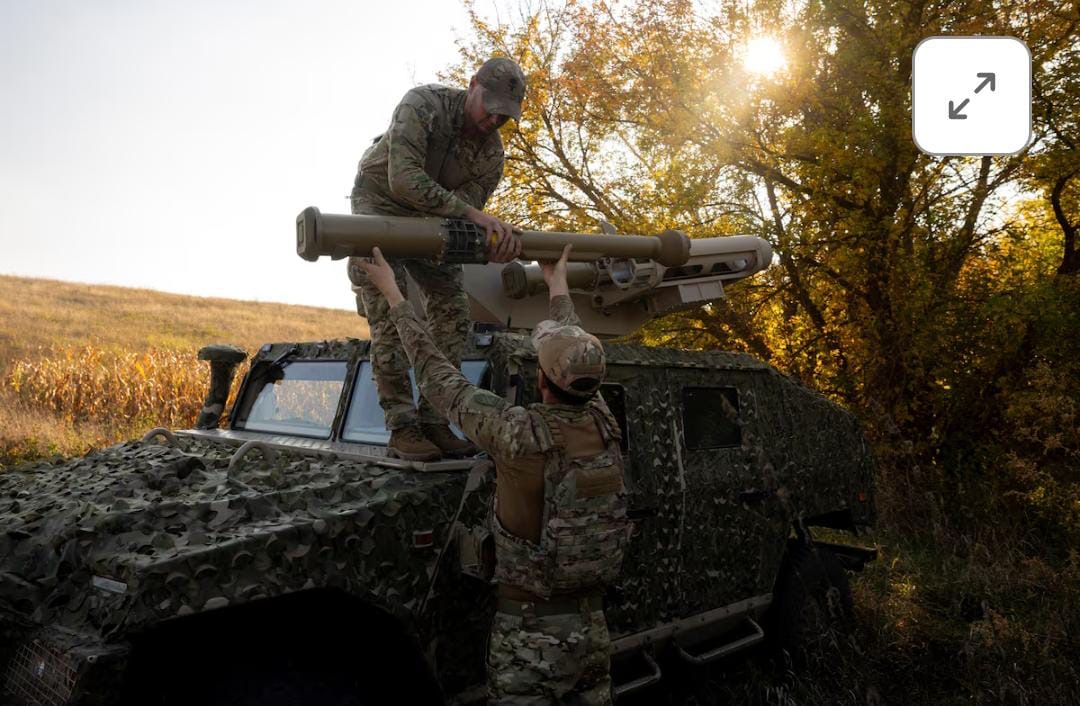
During the operation, Ukraine deployed remotely controlled ground vehicles fitted with heavy machine guns, grenade launchers and explosives to attack Russian positions. Some of the robotic systems were also used to clear minefields.
In one reported instance, Ukrainian forces deployed combat robots behind Russian lines using modified quadcopter bomber drones, an operation the Ukrainian military described as a first in the conflict.
As Ukrainian assault troops advanced, aerial drones targeted Russian dugouts and defensive positions considered too dangerous for soldiers to approach.
The Third Army Corps, which conducted the operation, said electronic warfare systems established a protective shield over the battlefield, disrupting enemy communications and disabling hostile drones.
Military commanders said the operation demonstrated how the growing integration of robotic systems and unmanned aerial vehicles could help Ukraine compensate for its numerical disadvantage against Russia’s much larger military.
However, the complex operation required the involvement of one of Ukraine’s most elite military formations and relied partly on the military-grade version of Elon Musk’s Starlink satellite communication service.
Brigadier-General Andrii Biletskyi said the nature of modern warfare had changed significantly, with military formations now coordinating far more battlefield assets than in conventional operations.
He explained that while a traditional military company or battalion might previously have operated a few dozen armoured vehicles and several command and observation posts, modern engagements could involve hundreds of aerial and ground-based systems simultaneously.
“Now, a thousand assets can be in the sky and on the ground in the same area at the same time,” he said.
Similarly, Third Army Corps commander, Dmytro Rohoziuk, said the Ukrainian military was adapting its combat doctrine to integrate robotic systems directly into infantry operations.
He noted that soldiers were no longer expected to operate primarily alongside conventional armoured vehicles, as the military increasingly developed strategies in which infantry formations worked alongside robotic platforms.
Meanwhile, Russian authorities have not publicly commented on the Ukrainian counteroffensive, although Moscow has maintained that its forces continue to advance along the approximately 1,200-kilometre frontline.
Russia has also deployed various aerial and ground-based drones, alongside electronic warfare systems, to strengthen its battlefield operations.
The conflict, which has lasted nearly five years, has significantly transformed modern warfare, forcing both countries to accelerate the development of military drones, robotic systems and technologies designed to counter enemy attacks.
Russia’s Defence Ministry did not respond to questions concerning Operation Vivaldi.
However, Christopher Tuck, an expert in strategic studies at King’s College London, described the Ukrainian operation as a limited but strategically important victory.
According to him, Ukraine succeeded in inflicting an operationally significant setback on Russian forces by disrupting a major attempt to outflank the country’s eastern defensive strongholds.
He, however, cautioned that the operation’s impact remained localised, stressing that it did not represent a broader strategic breakthrough in the war.
About the Author