Praise Isioye
Tony Elumelu, the founder of the Tony Elumelu Foundation, has stated that Africa should focus on investment and trade instead of aid to boost its development and tap into the continent’s economic potential.
He pointed out that Africa’s main issue is not a lack of entrepreneurial talent but rather insufficient capital to support businesses and unlock the continent’s economic capabilities.
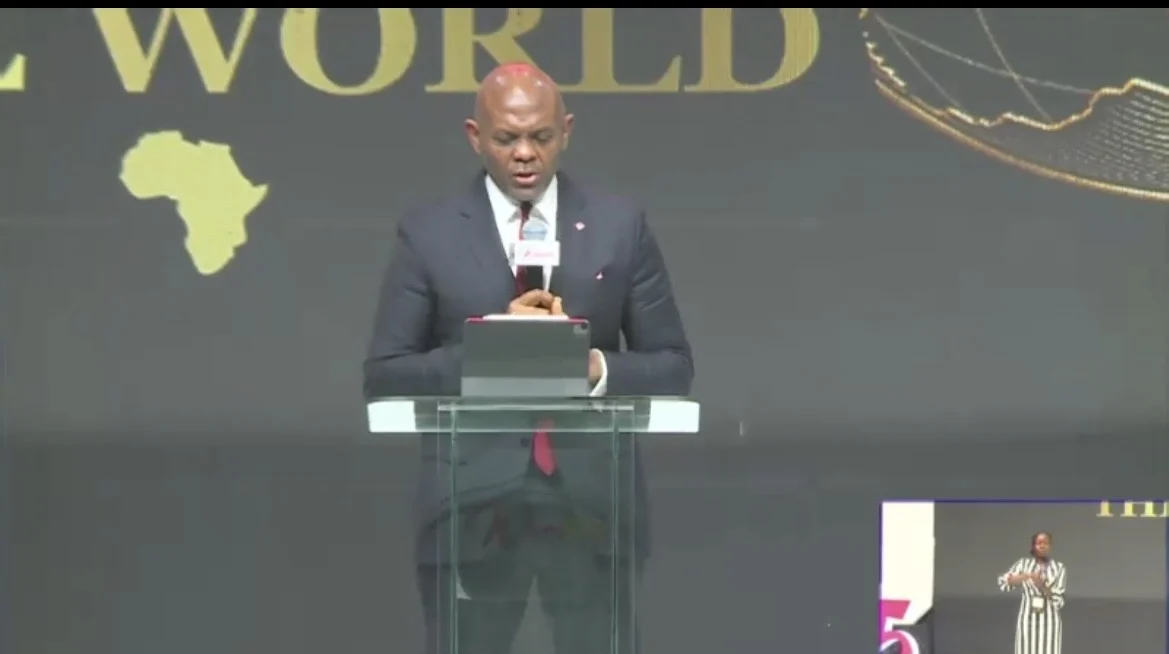
Elumelu made these comments on Friday during the second day of the 25th annual conference for Women in Management, Business, and Public Service, which took place at Eko Hotels and Suites in Victoria Island, Lagos.
He mentioned that in 2026, the foundation received 265,529 applications from young Africans with business ideas but could only provide funding for 3,200 projects, leaving over 262,000 applicants without assistance.
“This shows there isn’t a lack of entrepreneurial talent in Africa. The real problem is a shortage of capital,” he explained.
Speaking on the topic “The Geography of Opportunity: Why the World Needs What Africa Has,” Elumelu emphasized that the continent needs to attract more local investments to help entrepreneurs and foster development.
“The future lies in investment and trade, not aid,” he said, stressing that African nations must develop their capacity to fund their own progress instead of relying heavily on outside help.
He believes that Africa’s pension funds, banks, insurance companies, and family offices should invest more in businesses instead of focusing mainly on government securities or keeping their money overseas.
“The key to Africa’s growth over the next decade is to create African capital that invests within Africa,” he stated.
The businessman pointed out that electricity, creating value, and access to capital are significant obstacles to economic growth in the continent. He also mentioned intra-African trade as a fourth challenge.
Regarding electricity, he emphasized that without reliable power and connectivity, industrialization and advancements in artificial intelligence will be tough to achieve.
“We cannot discuss industrialization without addressing electricity. Factories need it to operate. Hospitals and schools depend on it too,” he remarked.
He encouraged African nations to move past just exporting raw materials and instead focus on processing and adding value to their resources locally.
“If we have dependable power and a supportive environment, why should we export raw lithium, cocoa, or crude oil? We should refine, process, brand them, and then sell them globally,” he questioned.
On the topic of trade, Elumelu noted that less than 20% of Africa’s trade occurs between African countries, even with the creation of the African Continental Free Trade Area.
“It is now easier to transport goods from Lagos to Liverpool than from Lagos to Luanda. Less than 20% of our trade happens between these two places,” he stated.
He emphasized the need for better roads, railways, ports, payment systems, and customs processes to make trading across borders easier. He encouraged African businesses to view the continent as a shared market.
Regarding women’s involvement in business, Elumelu pointed out that women have shown they can lead and create successful companies but often lack access to the funding and recognition they deserve.
“Women’s leadership in the economy isn’t just about fairness; it’s essential for staying competitive,” he remarked.
He mentioned the work of the Tony Elumelu Foundation, which he and his wife, Awele, have used to provide over $100 million in startup funds to 24,633 young entrepreneurs in all 54 African countries over the past 15 years.
He noted that businesses backed by the foundation have created more than 1.5 million jobs and earned over $4.2 billion in revenue.
He highlighted that women entrepreneurs supported by the foundation showed impressive business results and tended to reinvest and hire workers at rates that their male peers should aspire to match.
“We observe our women entrepreneurs at the Tony Elumelu Foundation reinvesting profits, and we see them hiring at rates that should inspire our male entrepreneurs,” he added.
Elumelu remembered how his mother, who owned a small restaurant, influenced his view of business and taught him important lessons about taking risks, managing money, being disciplined, and staying strong in tough times.
“When people ask me if women can lead businesses in Africa, I find that question odd because from my experience, they already do. We just haven’t given them the funding, the titles, or the recognition they deserve,” he stated.
The 25th annual WIMBIZ conference took place from Thursday to Friday in Lagos with the theme “Rooted, Rising, Ready: Born in Africa, Built for the World.” WIMBIZ is a non-profit organization dedicated to promoting and supporting women in management, business, and public service.
About the Author