By Isamotu Idris
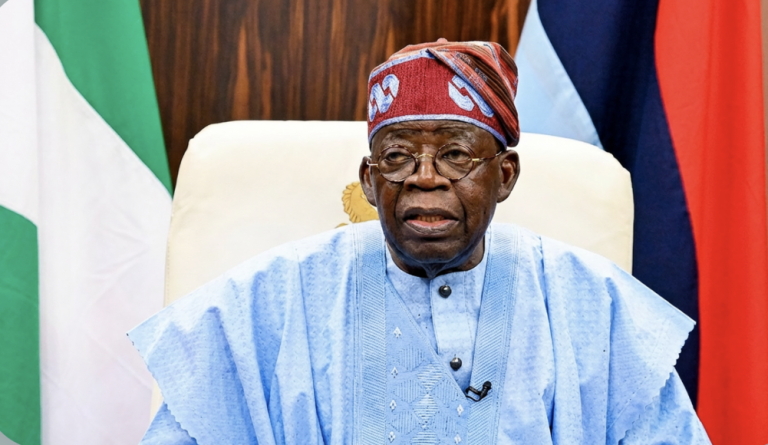
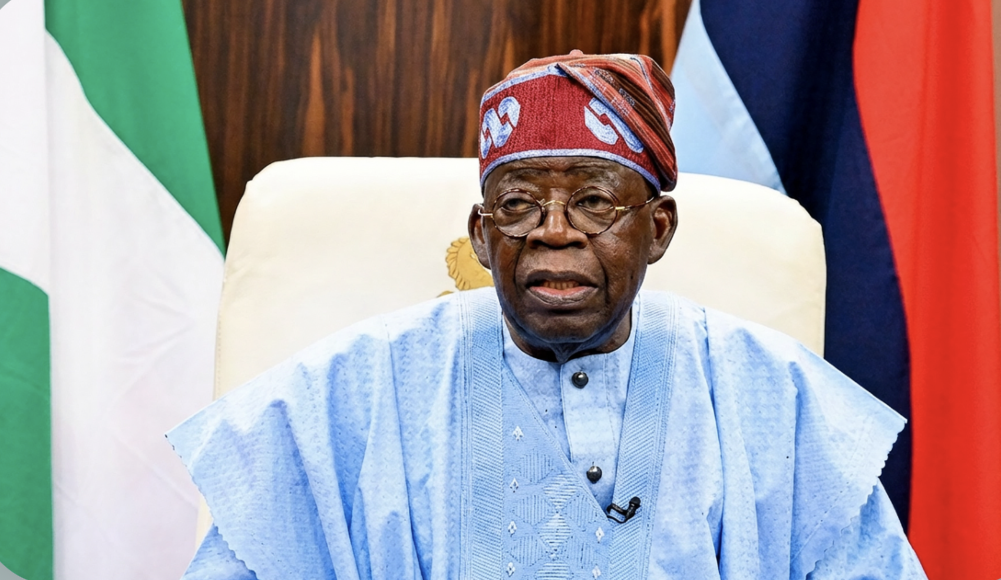
President Bola Tinubu has said non-oil activities now contribute approximately 96 per cent of Nigeria’s Gross Domestic Product (GDP), while the country’s foreign reserves have risen to about $55 billion, providing more than 14 months of import cover.
The President attributed the development to his administration’s economic reforms, saying Nigeria was gradually transitioning from economic stabilisation to shared prosperity through economic diversification, infrastructure development and increased private-sector participation.
Tinubu, represented by the Speaker of the House of Representatives, Tajudeen Abbas, disclosed this on Thursday in Abuja during the public presentation of a book titled Economic Diversification and Structural Transformation in Nigeria: Past, Present and Future.
He reaffirmed his administration’s commitment to building a $1 trillion economy by 2030, driven by investments in agriculture, manufacturing, energy, infrastructure and the digital economy.
The President recalled that he inherited a challenging economic situation in May 2023, characterised by a weakening naira, mounting debt-servicing obligations, dwindling foreign reserves and an unsustainable fuel subsidy regime.
He said his administration introduced far-reaching reforms, including the removal of the petrol subsidy and the unification of the foreign exchange market, while acknowledging the economic difficulties the measures imposed on households.
“These were not easy decisions, and I know the weight they placed on every household, but they were necessary, and today the pain is yielding its promise,” he said.
Tinubu disclosed that Nigeria’s non-oil exports had surpassed $6 billion, describing the figure as the highest in the country’s history.
He added that non-oil revenue increased from N13.63 trillion in 2023 to N16.4 trillion in the first half of 2026.
According to him, the government is relying on private-sector investments to accelerate economic growth, noting that the 2025 budget introduced a de-risking framework expected to attract 86 per cent of the investments required to achieve the 2030 economic target.
On fiscal reforms, the President said the administration was harmonising the tax system to eliminate multiple taxation and create a more favourable business environment.
He maintained that sustainable economic growth must be driven by increased production rather than higher tax burdens.
“We cannot tax our way into prosperity; we must produce our way there,” he said.
On the power sector, Tinubu highlighted efforts to revive the Mambilla Hydroelectric Power Project following Nigeria’s victory in a $3.38 billion arbitration case at the International Chamber of Commerce in Paris.
He also cited plans to expand Geregu Power’s capacity to 1,300 megawatts and revive the Port Harcourt and Warri refineries, stressing that reliable electricity supply remained essential to industrial growth.
The President identified the Kano-Katsina-Maradi Railway, Lagos-Calabar Coastal Highway and Sokoto-Badagry Superhighway as major infrastructure projects expected to strengthen connectivity, facilitate trade and stimulate economic activities.
In the agricultural and industrial sectors, he said the government was promoting irrigation, mechanisation and livestock reforms, while providing affordable credit to local industries and encouraging domestic processing of mineral resources.
He further disclosed plans to deploy 90,000 kilometres of fibre-optic cables and implement the 3 Million Technical Talent programme to expand digital infrastructure and equip Nigerians with technology skills.
Tinubu said the Bank of Industry was also providing low-interest loans and grants to market women, artisans and young entrepreneurs across the country’s 774 local government areas.
On social investment, he highlighted the role of the Nigerian Education Loan Fund (NELFUND) in expanding access to higher education, alongside a university solarisation programme designed to address electricity challenges in tertiary institutions.
He added that more than 10,000 housing units were under development across 14 states and the Federal Capital Territory under the Renewed Hope Cities and Estates Programme.
The President also disclosed that the MOFI Real Estate Investment Fund had provided approximately N128 billion in mortgage financing to 1,859 families across 25 states.
He pledged that his administration would work with the National Assembly and other stakeholders to establish a robust regulatory authority for the housing and real estate sector.
Earlier, the author, Dr Abdulmumin Jibrin, a member of the House of Representatives representing Kiru/Bebeji Federal Constituency of Kano State, said Nigeria’s long-term economic prosperity depended on harnessing the potential of non-oil sectors, particularly agriculture, technology, solid minerals, manufacturing and the creative industry.
“For too long, our nation has leaned heavily on a single economic pillar. The future of our macro-prosperity depends on our ability to aggressively unlock the vast potential of our non-oil sectors,” he said.
Jibrin explained that his experience chairing several House committees, including Finance, Appropriations, Land Transport, Foreign Affairs, and Housing and Habitat, informed the book’s examination of fiscal policies, infrastructure development and economic transformation.
The 555-page publication, reviewed by Dr Reuben Abati, explores Nigeria’s economic history, evolving leadership and policy approaches, as well as efforts to achieve sustainable prosperity beyond dependence on oil.
The event also featured a keynote address by Anambra State Governor, Prof. Charles Soludo, while Alhaji Abdulsamad Rabiu formally presented the book.
About the Author