By Our Correspondent
Nigeria’s digital economy holds significant investment potential, but persistent challenges relating to affordability, digital literacy, smartphone access and limited adoption of online services continue to constrain its growth, a new report by the National Information Technology Development Agency (NITDA) has revealed.
The Nigeria Tech Outlook Report 2026, unveiled on Wednesday in Abuja, identified a significant disparity between access to financial services and the actual use of digital platforms, highlighting opportunities for investors across several technology-driven sectors.
According to the report, 86.5 per cent of Nigerian adults own financial accounts, but only 12 per cent accessed digital credit within the preceding 12 months, indicating limited penetration of technology-enabled lending services.
The report also found that only 40.6 per cent of adults personally used smartphones, while just 6.6 per cent had purchased goods online in the three months preceding the survey.
These figures, it noted, reflect the limited adoption of digital services and the challenges confronting businesses seeking to expand Nigeria’s digital marketplace.
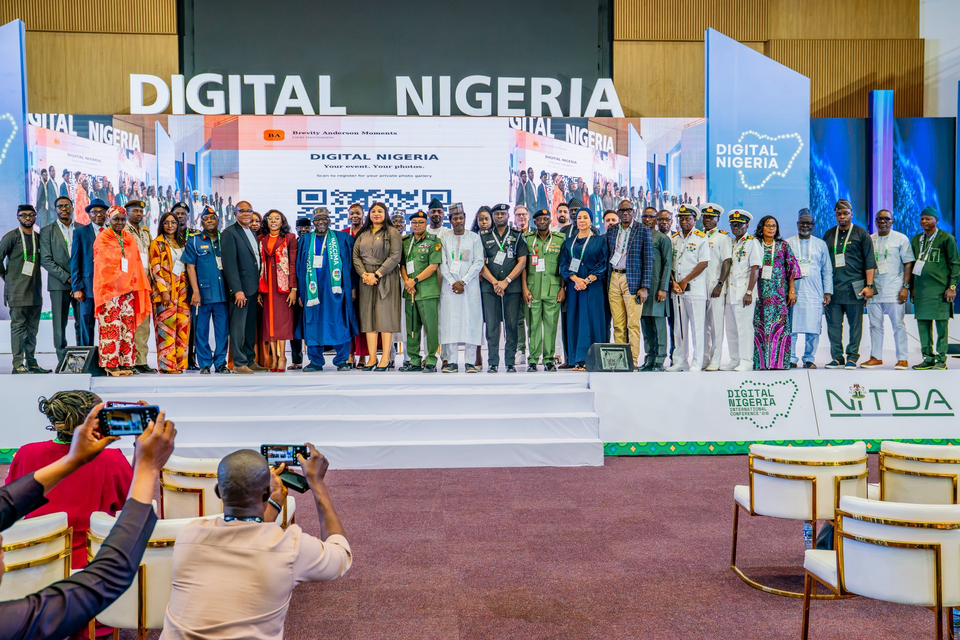
NITDA Director-General, Mallam Kashifu Inuwa, presented the report at the ongoing Digital Nigeria International Conference and Exhibition (DNICE) 2026 in Abuja.
The publication provides a national baseline for evaluating Nigeria’s digital economy, identifying investment opportunities and tracking developments in financial services, telecommunications, e-commerce, e-government, e-health, digital access, skills development, cybersecurity and inclusion.
Inuwa disclosed that the research was based on 2,147 household interviews, 539 health facility interviews, 15 key informant interviews and 10 administrative records obtained from relevant institutions.
The findings further revealed low adoption of digital public services, with only 17.9 per cent of respondents indicating that they had accessed government services online within the preceding 12 months.
In the healthcare sector, the report identified considerable opportunities for technology-driven service delivery, noting that 75.9 per cent of adults were willing to use telemedicine if available, despite only 11.3 per cent having health insurance coverage.
On digital security, 13.1 per cent of respondents reported experiencing digital financial fraud, underscoring the need to strengthen cybersecurity systems, consumer protection and public confidence in electronic transactions.
Inuwa said the report would provide investors with evidence-based insights into opportunities in digital payments, telecommunications infrastructure, smartphone distribution, e-commerce, logistics, electronic government services and digital healthcare.
He explained that the assessment was designed to enable government institutions, investors, technology innovators, researchers and development partners, make informed decisions based on measurable evidence rather than assumptions.
However, he identified unreliable electricity supply, inadequate digital skills, affordability constraints, poor interoperability and weak consumer protection as major challenges that must be addressed to unlock the sector’s full potential.
To improve access to the findings, NITDA has developed a digital dashboard that allows stakeholders to examine the data, monitor progress and provide feedback beyond the printed publication.
The agency also plans to institutionalise an annual assessment of the digital economy to evaluate performance, measure progress against established targets and adjust policies in response to emerging trends.
The report comes amid government efforts to expand digital literacy, improve access to technology and strengthen Nigeria’s digital economy.
In May 2025, NITDA launched its Digital Literacy for All Initiative (DL4ALL) nationwide, targeting 70 per cent digital literacy coverage by 2027 and 95 per cent by 2030. The initiative followed a pilot programme that trained 152,790 Nigerians across 12 states.
Similarly, a KPMG study reported by Nairametrics in September 2026 indicated that smartphone ownership in Nigeria increased to 75 per cent in 2025, compared with 64 per cent in 2023.
Despite the improvement, the Nigerian Communications Commission (NCC) has continued to identify the high cost of devices and internet connectivity, limited access to digital products and inadequate digital skills as major barriers to digital inclusion, particularly among persons with disabilities.
The NITDA assessment suggests that expanding telecommunications infrastructure and increasing financial account ownership alone may not translate into meaningful digital economic growth without improvements in affordability, digital literacy, consumer confidence and access to practical online services.
For investors, the findings point to substantial opportunities in digital lending, smartphone distribution, e-commerce, logistics, telemedicine and digital public infrastructure.
However, realising these opportunities will depend on how effectively policymakers and businesses address the structural challenges limiting wider participation in Nigeria’s digital economy.
About the Author