Moses Daniel, Abuja
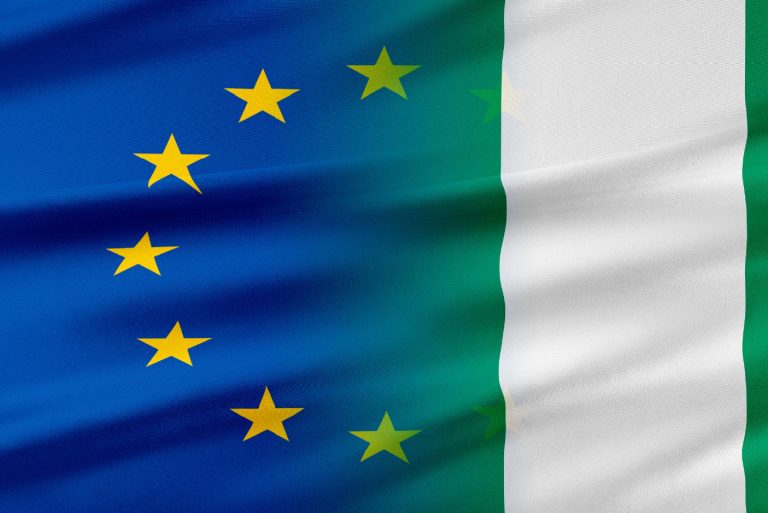
Nigeria and the European Union (EU), have signed a Readmission Agreement after nearly a decade of negotiations, paving the way for the return of Nigerians who have no legal basis to remain in EU member states.
The agreement also sets the stage for discussions on a €100 million in additional European funding to support broader migration management and security cooperation between both parties.
The Minister of Foreign Affairs, Ambassador Bianca Odumegwu-Ojukwu, and the EU Commissioner for Internal Affairs and Migration, Magnus Brunner, led their respective delegations at the signing ceremony held on Wednesday in Abuja.
Speaking at the event, Odumegwu-Ojukwu commended both parties for their commitment and perseverance throughout the decade-long negotiations, describing the agreement as a significant milestone in Nigeria-EU relations.
She said the pact reflected their shared determination to strengthen migration cooperation while safeguarding the welfare, dignity and well-being of Nigerian citizens.
The minister expressed confidence that the agreement would provide a foundation for broader collaboration in areas of mutual interest, including education, capacity building and vocational training.
Earlier, during a meeting with Brunner and his delegation at the Ministry of Interior on Tuesday, the Minister of Interior, Dr. Olubunmi Tunji-Ojo, reaffirmed the Federal Government’s commitment to implementing the agreement.
He stressed that Nigeria neither encouraged irregular migration nor tolerated any breach of the mutual trust underpinning international cooperation.
Tunji-Ojo described the agreement as an important step towards establishing an orderly, dignified and mutually beneficial migration management system, noting that mutual trust was essential to expanding opportunities for legal migration.
The minister disclosed that Nigeria had integrated more than 17 million migration records into an automated system designed to strengthen identity verification and facilitate the identification of Nigerians returned from European countries.
According to him, the system would enable relevant authorities to establish the nationality of returnees more efficiently, including individuals who travelled with valid documents but subsequently lost or destroyed them, as well as those who entered foreign countries without identification documents.
He said Nigeria was already implementing similar arrangements with the United Kingdom, while discussions were ongoing with the United States to establish a comparable framework.
On border security, Tunji-Ojo called for stronger international collaboration and real-time information sharing to tackle human trafficking, migrant smuggling and other transnational crimes.
He maintained that no country could effectively address the challenges independently without sustained cooperation with international partners.
The minister also highlighted progress in the Federal Government’s correctional service reforms, disclosing that the number of repeat offenders had declined from approximately 13,000 in 2023 to about 1,600 in 2025.
In his remarks, Brunner described the agreement as a major milestone in EU-Nigeria relations, expressing optimism that its implementation would produce significant benefits for both parties and create opportunities for cooperation in other critical areas.
He commended Nigeria’s efforts to modernise its border security architecture and assured that the EU was prepared to deepen collaboration through its border management agency.
The EU commissioner identified police cooperation, combating human trafficking and migrant smuggling, and expanding legal migration pathways as priority areas requiring sustained engagement.
He also disclosed that approximately 260,000 Nigerians were legally resident in EU member states, emphasising the need to create more opportunities for safe and regular migration.
A member of the EU delegation, Johannes Lucher, acknowledged that negotiations had been challenging, explaining that Nigeria had sought to incorporate additional areas of cooperation, including combating human trafficking, drug trafficking and expanding legal migration opportunities.
He, however, said discussions on these broader areas would commence following the conclusion of the readmission agreement.
Lucher further disclosed that the EU had made nearly €100 million in additional funding available to support wider cooperation, with discussions expected to begin with Nigerian officials responsible for migration and security.
The Readmission Agreement establishes a formal framework for migration cooperation between Nigeria and the EU, outlining the reciprocal obligations of both parties, particularly in ensuring the safety, dignity and protection of citizens’ human rights throughout the readmission process.
Both parties reaffirmed their commitment to implementing the agreement, strengthening mutual trust and developing practical solutions to shared challenges involving migration management, border security and other transnational crimes.
About the Author