Mark Aba
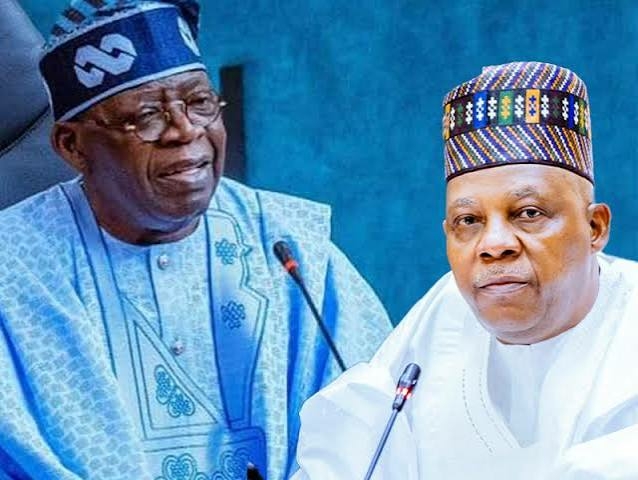
Vice-President Kashim Shettima, former Nigerien President Mahamadou Issoufou, former military Head of State, General Ibrahim Babangida, and other prominent leaders have paid glowing tributes to the late President Muhammadu Buhari, describing him as a patriot whose leadership and commitment to Nigeria left an enduring legacy.
Former President Goodluck Jonathan also explained why he readily conceded defeat to Buhari in the 2015 presidential election, saying his decision was informed by his belief in the late president’s patriotism and statesmanship.
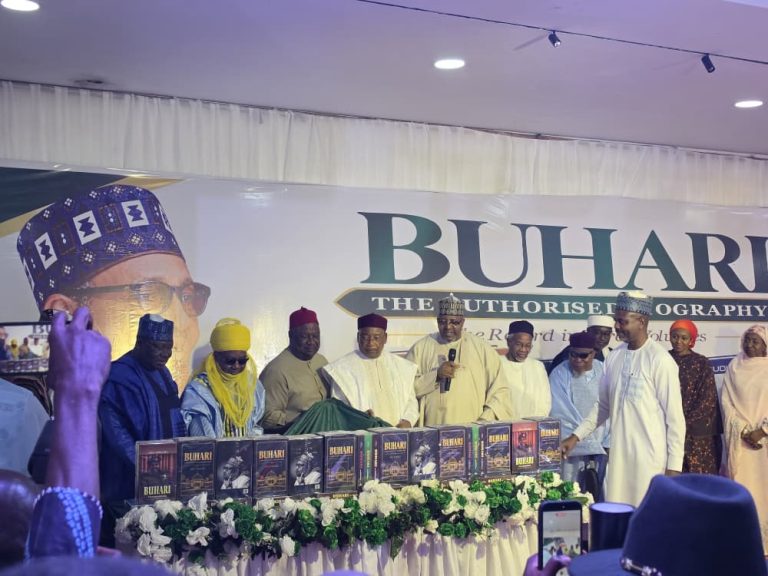
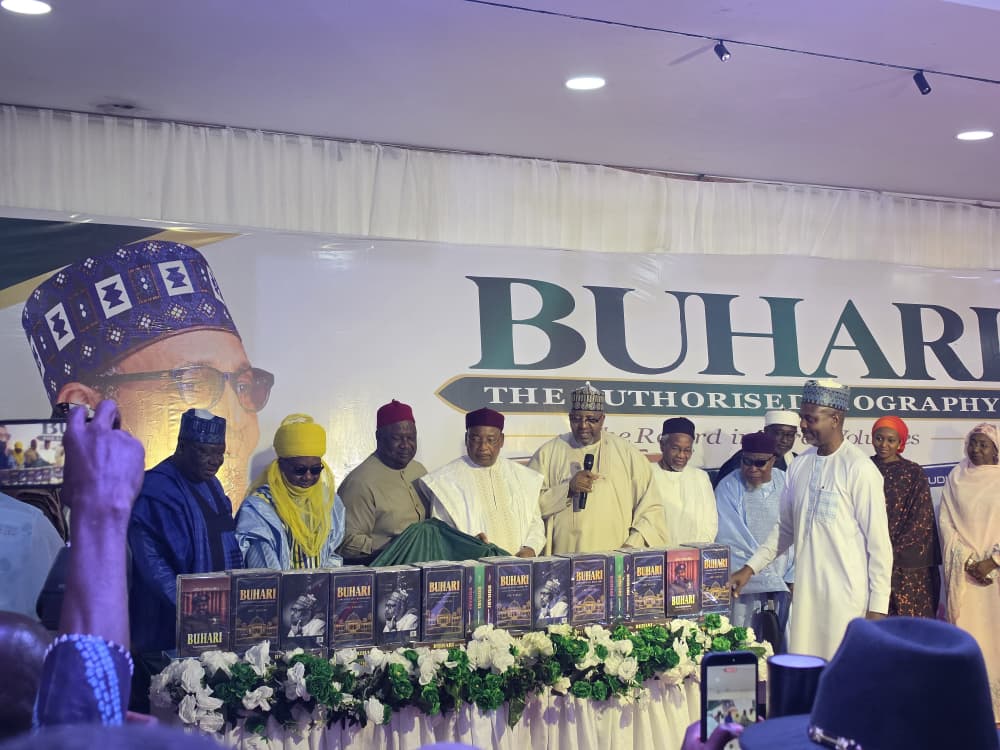
The leaders spoke on Thursday in Abuja at the public presentation of a three-volume authorised biography of Buhari, titled Buhari: The Phenomenon, Buhari: The Presidency and Buhari: The Reckoning.
Representing Shettima, his Special Adviser on General Duties, Dr Aliyu Modibbo, described Buhari as a phenomenon whose life and conduct distinguished him from conventional Nigerian leaders.
He said the late president’s lifestyle, leadership principles and modest disposition offered valuable lessons to religious leaders, public office holders and successive generations.
Shettima said Buhari’s popularity among Nigerians, despite criticisms from some quarters, reflected the public’s appreciation of his distinctive character and lifestyle.
The Vice-President stressed the importance of leaders living exemplary lives and leaving behind records of service capable of inspiring future generations.
He also urged public officials to document their experiences and contributions, warning that failure to tell their stories could allow others to distort their records.
“There is no doubt that those fortunate enough to occupy positions of authority cannot afford the luxury of silence. If you refuse to tell your story, others will tell it. Some will rise from ignorance, others will rise with an agenda,” he said.
Shettima said Buhari influenced him both as a leader and as an individual, describing the late president as a patriot whose commitment to Nigeria transcended the offices he occupied.
“He taught me that the dignity of office is based upon the character of its occupant. He also taught me that a leader’s example continues to speak after he is out of service. We belong to a generation that doesn’t seem to hear about this wisdom,” he said.
He welcomed the biography, saying the authorised account would offer insights into Buhari’s life and leadership through his personal recollections and testimonies from people who worked with him.
Former Nigerien President Issoufou, who chaired the occasion, described Buhari as a significant figure in Nigeria’s political history and one of the most prominent African leaders of his generation.
He said Buhari was regarded by Nigeriens as almost a compatriot and kinsman, noting that Nigeria and Niger shared historical, geographical and cultural ties that predated the colonial-era boundary separating the two countries.
Issoufou cited Buhari’s decision to extend the railway from Kano to Maradi in Niger without requiring financial contributions from the neighbouring country as evidence of the shared interests and special relationship between the two nations.
He recalled that during his meeting with Buhari on June 3, 2015, security dominated their discussions, with both leaders agreeing that the security of Nigeria and Niger was interdependent.
“For President Buhari, the matter was urgent and results were needed quickly. We agreed that the distinction between internal and external security had largely disappeared, and that the security of each country depended, in perfect reciprocity, upon the security of the other,” he said.
Issoufou said Buhari’s determination to defeat Boko Haram was unwavering and that he supported the Multinational Joint Task Force, sustaining the security cooperation initiated by his predecessor, Jonathan.
He said their collaboration extended beyond security to regional integration and development, noting that both leaders shared a vision of a peaceful, united, stable, sovereign and prosperous Nigeria, West Africa and Africa.
The former Nigerien president added that they worked together through the Economic Community of West African States (ECOWAS) and the African Union to advance regional and continental integration and the implementation of Agenda 2063.
Babangida, represented by former Inspector-General of Police Mohammed Dikko Abubakar, described Buhari as a comrade-in-arms with whom he shared years of military service and a commitment to Nigeria’s unity and progress.
He said although the two former military leaders disagreed at various times, they remained united in their pursuit of a peaceful and united Nigeria.
“I salute the memory of General Buhari as a comrade-in-arms. Together, we travelled the path of training in the armed forces of our country. Together, we walked the trenches of danger for common good. We faced mortal danger in order for our nation to survive,” he said.
Babangida said their differences notwithstanding, both men remained committed to the common good of the country.
Jonathan, who presented the books, said he conceded defeat to Buhari in the 2015 presidential election without contention because he regarded the former president as a statesman who loved Nigeria and was committed to its development.
Represented by former Senate President Anyim Pius Anyim, Jonathan said his decision was driven by patriotism and confidence in Buhari’s leadership qualities.
“President Buhari is renowned for being that politician who was able to unseat a sitting incumbent. President Goodluck is renowned to be that sitting African president who handed over power without any form of contention.
“It was easy for President Goodluck to say, ‘Look, this is a statesman that I know that will love Nigeria.’ So there was no need for any form of contention. That is the story,” he said.
Jonathan added that Buhari was respected throughout his administration and accorded the courtesies due to a statesman, despite being in opposition.
Earlier, former Minister of Water Resources and chairman of the planning committee, Suleiman Adamu, said the three volumes chronicled Buhari’s life across more than six decades of Nigeria’s history, including his military career, the civil war, government service, coups, detention, opposition politics and eight years as elected president.
Adamu stressed that the biography was authorised by Buhari during his lifetime and was not initiated after his death to reconstruct his story.
He said Buhari participated in the process, granted repeated interviews, answered questions about various stages of his life, including controversial episodes, and assisted the author in accessing people and records necessary for documenting his experiences.
“The President’s testimony is here. But so too are the voices of those who served with him, worked under him, disagreed with him, advised him, opposed him, knew him privately and encountered him through the institutions over which he presided,” Adamu said.
The author, Dr Udu Yakubu, said Buhari personally authorised the project and made himself available for repeated interviews.
“He gave me something no biographer can manufacture: access to the subject while the subject was still alive. He did not always agree with the premise of a question. He did not always answer as I expected. But he answered,” Yakubu said.
Speaking on behalf of the Buhari family, his daughter, Dr Fatima Buhari, expressed gratitude to former and serving Nigerian and African leaders, guests at the event and Nigerians for their support, prayers and goodwill throughout her father’s years of public service.
About the Author