By Susan Taiwo
Uganda has invited Nigerian industrialist Aliko Dangote to invest in its proposed multi-billion-dollar oil refinery and other strategic industrial projects, including fertiliser manufacturing, phosphate processing and salt production, as the East African country intensifies efforts to boost local production and reduce dependence on imports.
The investment proposals include participation in a planned 60,000-barrel-per-day refinery in the Hoima area, alongside opportunities in fertiliser production and the processing of phosphate and salt.
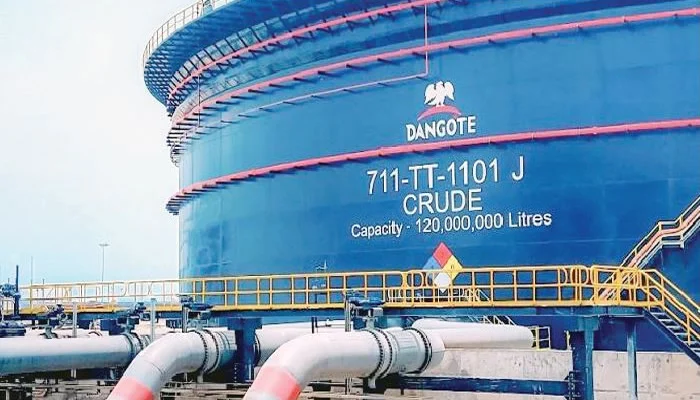
The proposals were presented during a visit by a Ugandan government delegation to the Dangote Petroleum Refinery and Petrochemicals and Dangote Fertiliser Limited in Lagos.
The delegation was led by Uganda’s Minister of Energy and Mineral Development, Dr Monica Musenero Masanza, and Minister of State for Finance, Planning and Economic Development (Privatisation and Investment), Hajjat Amina Mukalazi.
Speaking during the visit, Mukalazi urged Dangote to take a leading role in the proposed refinery project, citing his group’s experience in financing, constructing and operating large-scale industrial facilities.
She noted that the proposed Ugandan refinery could complement the group’s planned refinery in Lamu, Kenya, with the Ugandan facility serving inland markets while the Kenyan project caters to coastal and maritime markets.
“You have shown that an African company can build world-scale industry in Africa and run it by Africans themselves,” she said.
Mukalazi said Uganda’s crude oil and mineral resources offered significant opportunities for integrated industrial investments, particularly in the production of fuel, fertilisers and chemicals.
“Our crude, our phosphate, our salt are waiting to be turned into fuel, fertilisers and chemicals here in Africa and in Uganda by Africans,” she said.
Although the investment estimates presented to Dangote would require further technical assessment, the minister expressed confidence that a partnership with the conglomerate could accelerate Uganda’s industrialisation drive.
She also invited Dangote to visit Uganda for further discussions, assuring him that the government was prepared to address potential challenges that could hinder investment.
“Uganda needs Dangote, and now is the right time. Our country is ready and moving rapidly towards industrialisation,” she said.
According to her, the proposed partnership would go beyond capital investment to deliver technology transfer, skills development, employment opportunities and increased participation by local businesses.
Also speaking, Musenero said Uganda was particularly interested in Dangote’s expertise in fertiliser production, noting that the country possessed mineral resources suitable for manufacturing but had faced challenges in converting them into finished products.
“We also have minerals that can be used to produce fertilisers, but our efforts to convert those resources into fertilisers have not been very successful. Here, we have seen a very large fertiliser manufacturing facility,” she said.
She described the proposed partnership as an opportunity for African countries to harness their natural resources and industrial capabilities through collaboration rather than relying heavily on external investors.
“This is Africa-to-Africa collaboration. We believe Dangote can operate very successfully in Uganda,” she said.
Musenero added that the scale of the facilities visited had demonstrated the potential of African-led industrial development, stressing the Ugandan government’s desire to accelerate discussions on the proposed investments.
President and Chief Executive of Dangote Industries Limited, Aliko Dangote, received the delegation alongside senior executives of the conglomerate.
The Managing Director and Chief Executive Officer of Dangote Petroleum Refinery and Petrochemicals, David Bird, said the presence of two Ugandan ministers during the visit demonstrated the government’s commitment to exploring an industrial partnership with the group.
He said Uganda’s abundant natural resources, human capital and political support provided a strong basis for potential collaboration.
“Uganda has incredible natural resources and human capital. As both ministers have expressed during this visit, there is also no shortage of ambition or political will to pursue industrialisation,” Bird said.
He added that the engagement was consistent with Dangote Industries’ expansion strategy in East Africa under its Vision 2030 programme.
About the Author